9 Non Muslim Scholars on Prophet Muhammad (peace be upon him)
9 Non Muslim Scholars on Prophet Muhammad (peace be upon him)
The non Muslim scholar, Prof. Ramakrishna Rao, said about the Prophet:
“The personality of Muhammad, it is most difficult to get into the whole truth of it. Only a glimpse of it I can catch. What a dramatic succession of picturesque scenes!
There is Muhammad, the Prophet. There is Muhammad, the Warrior; Muhammad, the Businessman; Muhammad, the Statesman; Muhammad, the Orator; Muhammad, the Reformer; Muhammad, the Refuge of Orphans; Muhammad, the Protector of Slaves; Muhammad, the Emancipator of Women; Muhammad, the Judge; Muhammad, the Saint. All in all these magnificent roles, in all these departments of human activities, he is alike a hero.”
The Prophet Muhammad (peace be
upon him) and the Origins of Islam
The
rise of Islam is intrinsically linked with the Prophet Muhammad, believed by
Muslims to be the last in a long line of prophets that includes Moses and Jesus.
Because Muhammad was the chosen recipient and messenger of the word of God
through the divine revelations, Muslims from all walks of life strive to follow
his example. After the holy Qur'an, the sayings of the Prophet (hadith) and
descriptions of his way of life (sunna) are the most
important Muslim texts.
Early Life
Muhammad was born into the most powerful tribe in Mecca, the Quraish, around
570 . The power of the Quraish derived from their role as successful
merchants. Several trade routes intersected at Mecca, allowing the Quraish to
control trade along the west coast of Arabia, north to Syria, and south to
Yemen.
Mecca
was home to two widely venerated polytheistic cults whose gods were thought to
protect its lucrative trade. After working for several years as a merchant,
Muhammad was hired by Khadija, a wealthy widow, to ensure the safe passage of
her caravans to Syria. They eventually married.
Divine Revelations
When he was roughly forty, Muhammad began having visions and hearing voices.
Searching for clarity, he would sometimes meditate at Mount Hira, near Mecca.
On one of these occasions, the Archangel Gabriel (Jibra'il in
Arabic) appeared to him and instructed him to recite "in the name of
[your] lord." This was the first of many revelations that became the basis
of the Qur'an, the holy book of Islam. These early revelations pointed to the
existence of a single God, contradicting the polytheistic beliefs of the
pre-Islamic Arabian Peninsula.
Initially
overwhelmed by the significance of what was being revealed to him, Muhammad
found unflinching support in his wife and slowly began to attract followers.
His strong monotheistic message angered many of the Meccan merchants. They were
afraid that trade, which they believed was protected by the pagan gods, would
suffer. From that point forward, Muhammad was ostracized in Mecca. For a time,
the influence and status of his wife and his uncle, Abu Talib, the chief of the
clan, protected Muhammad from persecution. After they died, however, Muhammad's
situation in Mecca became dire.
The Hijra
Emigration became the only hope for Muhammad and his followers' survival. In
622, they headed to Medina, another oasis town, where they were promised
freedom to practice their religion. The move from Mecca to Medina is known as
the hijra—the
flight—and marks year 1 of the Islamic, or hijri,
calendar.
Spreading the Message of Islam
In Medina, Muhammad continued to receive divine revelations and
built an ever-expanding community around the new faith. The conflict with the
Quraish continued, but after several years of violent clashes, Mecca
surrendered. Muhammad and his followers soon returned and took over the city,
destroying all its pagan idols and spreading their belief in one God.
The Night Journey and Ascension of the Prophet
Accounts of the ascension (mi'raj ) of Muhammad
have captured the imaginations of writers and painters for centuries. One
night, while the Prophet was sleeping, the Archangel Gabriel came and led him
on a journey. Mounted on the heavenly steed Buraq,
Muhammad traveled from the Ka'ba in Mecca to the "Farthest Mosque,"
which Muslims believe to be the Al-Aqsa Mosque in Jerusalem. There he prayed
with other prophets such as Moses, Abraham, and Jesus, and ascended to the
skies, where he was led by Gabriel through Paradise and Hell, and finally came
face to face with God. He then returned to earth to continue spreading the
message of Islam. According to Islamic belief, Muhammad was the only person to
see Heaven and Hell while still alive.
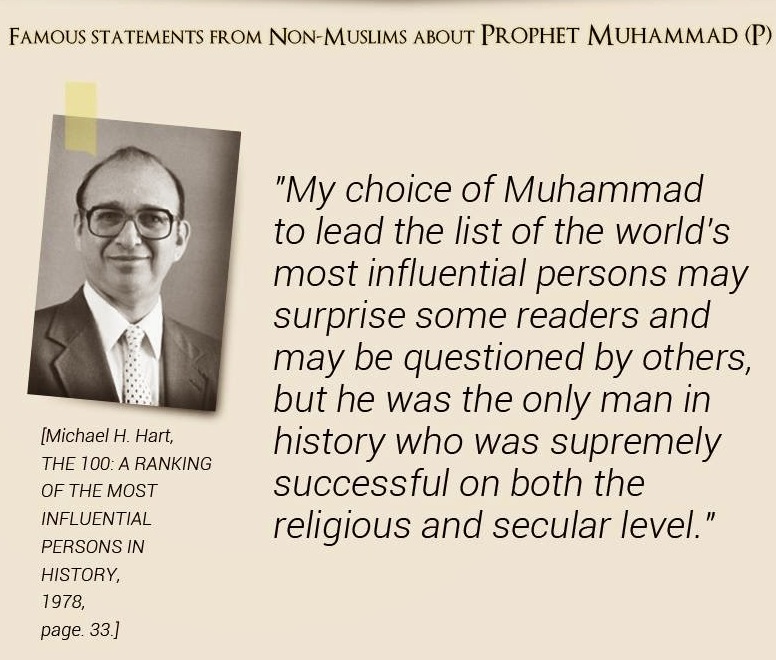
Michael H. Hart
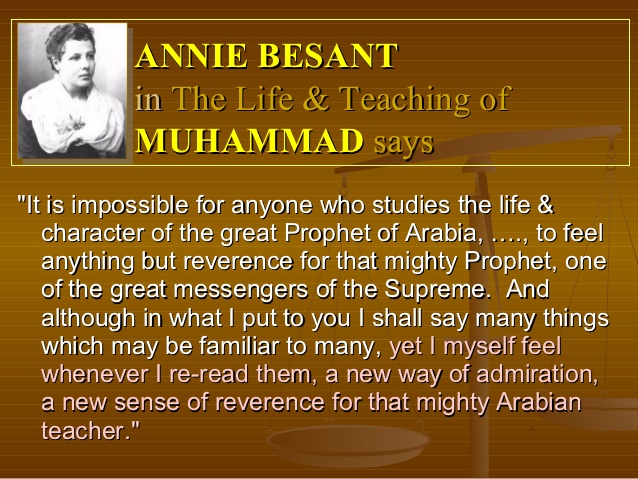
Annie Besant
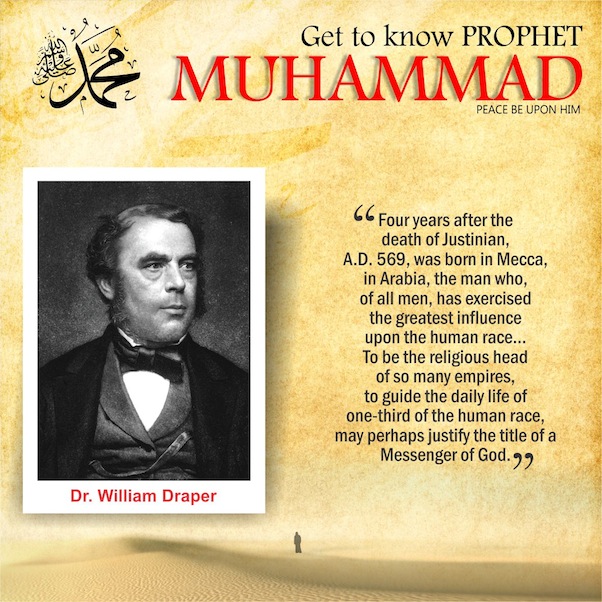
Dr. William Draper
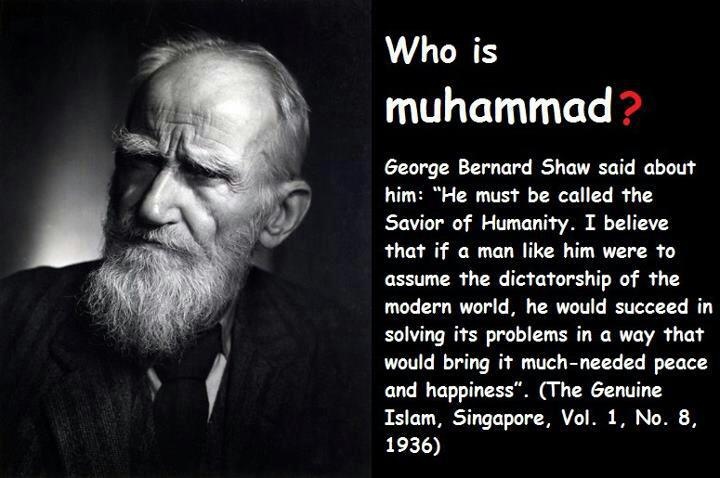
George Bernard Shaw on Prophet Muhammad
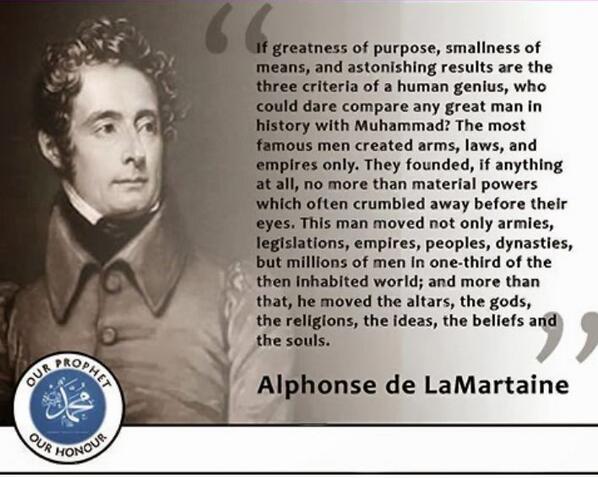
Alphonse de LaMartaine
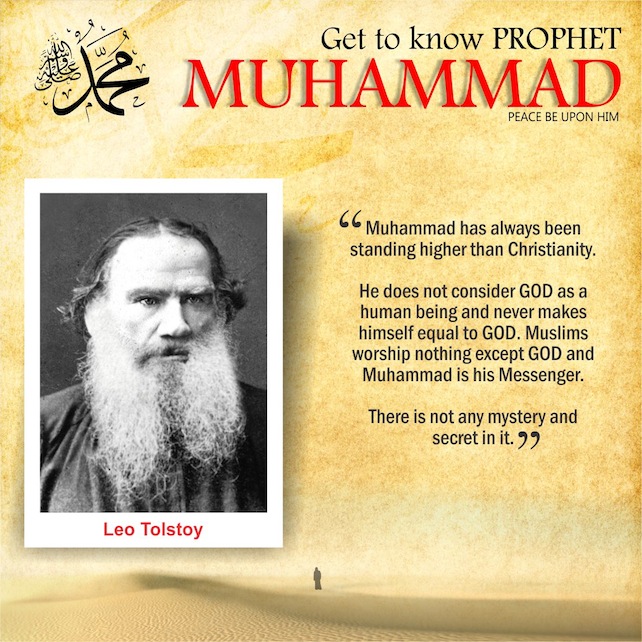
Leo Tolstoy
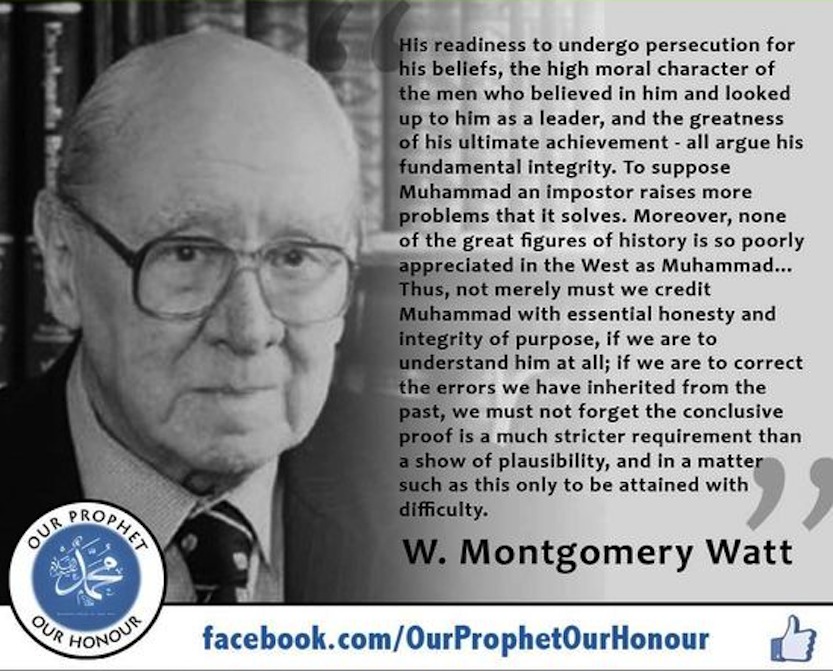
W. Montgomery Watt
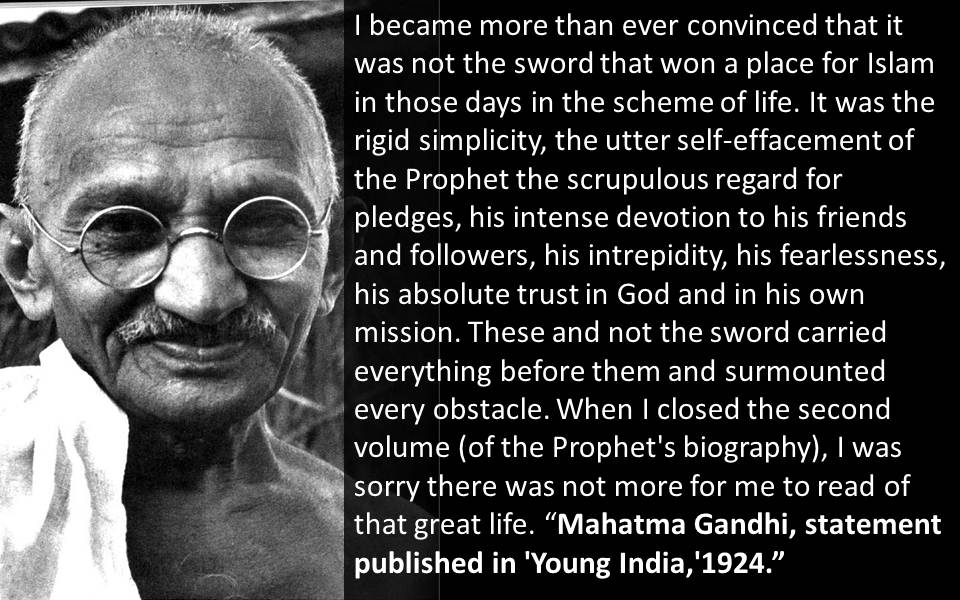
Mahatma Gandhi


Comments
Post a Comment